Have you ever watched an IT project spiral out of control - overrunning time, budget, or scope? Maybe you’ve seen a project lose sight of its purpose and deliver a substantial technical solution, but miss its real business objectives. Or, perhaps you’ve been part of a “like-for-like replacement”; a legacy system or platform upgrade that cost more, took longer, and changed less than anyone hoped.
Most of us have experienced moments like these.
What’s driving these setbacks? What do these situations have in common?
All too often, it’s a lack of Discovery - the crucial phase that should set the stage for success before anything is built. When discovery is overlooked, clarity fades, alignment breaks down, and complexity takes over. Partial solutions get locked in too early, and projects stall or drift because the original goal was never truly defined. Without strong discovery, projects risk becoming expensive delivery efforts rather than transformational initiatives.
At Optimation, we work alongside project teams to make discovery a genuine launchpad - it isn’t just a checkbox or a hasty requirements phase. It’s the foundation that aligns people, purpose, and direction before any building begins. Our approach ensures discovery is thoughtful, reduces uncertainty, focuses on value, and sets the stage for solutions that actually deliver on their promise.
What Is Discovery?
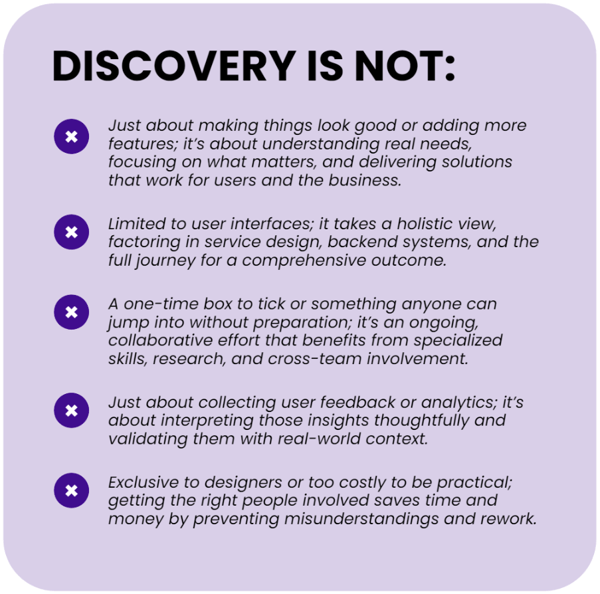
Discovery is a purposeful pause - a space to gather, reflect, and align before launching into delivery.
It helps teams step back, breathe, and find a common understanding of what success looks like and how to get there.
We guide discovery by supporting teams to make sense of scattered information and identify where gaps in knowledge, process, or expectations might impact the journey ahead through:
- Creating a programme-wide perspective to connect the landscape, inform decisions on sequencing and prioritisation, and enable practical roadmaps and proactive change.
- Facilitating stakeholder alignment and scope definition, balancing priorities and resolving potential conflicts early.
- Auditing objectives, user needs, processes, and system constraints to build a comprehensive view and highlight areas for improvement.
- Testing assumptions and assess proposed solutions, ensuring they align with broader business goals and address genuine needs.
- Capture actionable insights and surface what needs attention now, so teams are ready for change and risks are managed before they escalate.

Discovery fits wherever a project or process faces change, uncertainty, or complexity. Rather than resetting everything, it fills the blanks, raises what’s missing, and puts more control in your hands.
When to Use Discovery
Discovery delivers the greatest impact when it’s intentional and timed to meet pivotal moments in a project’s lifecycle. We’ve witnessed some of the most significant transformations when discovery is brought in at these critical points:
- At the outset of new projects, products, or features - giving teams a strong, shared foundation to build on.
- When exploring new markets, undertaking redesigns, mergers, or making strategic shifts.
- Whenever persistent issues, hidden risks, or unclear business goals arise - these are signals that discovery can help connect the dots and address underlying gaps.
- During periods of significant change, whether organisation-wide or within a single process - planning not just for immediate needs, but for end-to-end impact.
- Before narrowing down choices, as every decision now affects what’s possible in the future.
Discovery adapts naturally to scope and need, scaling from immersive workshops to light-touch reviews as the situation requires.

Who Is Involved in Discovery?
Discovery works best when it draws on a thoughtfully assembled mix of perspectives, anchored by facilitators who connect voices, ensure balanced participation, and help teams navigate complexity. At Optimation, our facilitators serve as neutral guides - leading the process, bridging perspectives, and fostering constructive collaboration so that every relevant voice, risk, and opportunity is considered.
- Stakeholders: Decision-makers, sponsors, and those responsible for priorities and resources - ensuring objectives and investment are firmly grounded in real business needs.
- Subject Matter Experts & Problem Solvers: Individuals with deep domain or user knowledge who surface risks, offer insights, and challenge assumptions to shape stronger solutions.
- Discovery Doers: Researchers, analysts, UX designers, and others actively driving discovery activities, structuring the process and translating findings into actionable results.
- Technical Implementors: Developers, IT leaders, operations, and process owners providing essential insight into systems, constraints, and technical realities.
- People Impacted & External Experts: End users, frontline staff, customers, and industry or regulatory specialists - bringing practical perspective, unmet needs, and market context that planning alone might miss.
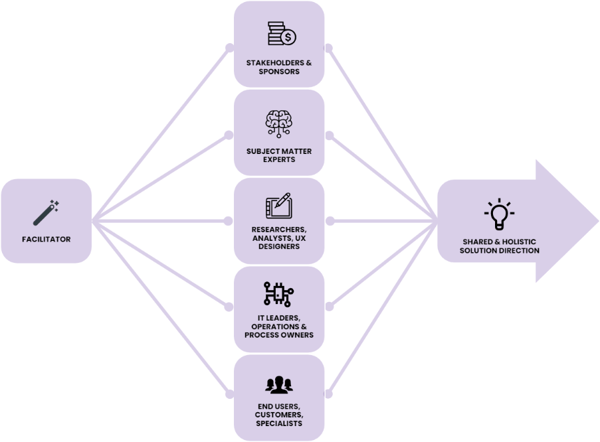
Bringing the right combination of these participants together creates a collaborative discovery that’s thorough, inclusive, and tailored to real project needs.
Where to Start? Engaging with Optimation
We see discovery as a shared process, not a one-size-fits-all task. There are several flexible ways to engage with us:
- Use our discovery self-assessment below to identify what kind of discovery effort will most support your goals.
- Book a free, no-obligation discovery readiness or needs chat - receive feedback and guidance tailored to your project and context.
- Connect with us for a personalised, in-depth conversation. Every Optimation partnership begins with understanding your unique situation, so discovery can be shaped to create lasting value from your first steps onward.
Whatever your starting point - new project, complex challenge, or blocked initiative - Optimation adapts discovery to fit your context, using what’s already known and seeking out what’s needed for clarity and progress.
Discovery Self-Assessment Quiz
Answer yes or no to the following questions, then assess your discovery needs using the scoring sheet below.
- Is your project entirely new or venturing into an unknown area?
- Do all key stakeholders agree on priorities and business goals?
- Does the project equally balance technology, business impact, and user needs?
- Are you confident you understand users’ or customers real pain points through actual research, not assumptions?
- Have you mapped all dependencies, affected systems, and teams?
- Is the project scope clearly defined and agreed upon?
- Is everyone impacted by the project ready to adopt changes?
- Have previous projects with similar scope and goals succeeded in your organisation?
Scoring Guide – how did you do?
Mostly “No” answers: You may benefit from Transformative discovery - involving workshops, broad engagement, and deeper research. We’d guide you in aligning, uncovering insights, and creating a clear course - so uncertainty and complexity turn into defined action.
Some mix of “Yes” and “No”: Consider a discovery accelerator - a focused, facilitated approach to bridge remaining gaps, validate priorities, and ensure your project stays on track.
Mostly “Yes” answers: Targeted validation or brief review may be all you need - a quick check to confirm assumptions, uncover any last tweaks, and move ahead with confidence.
Mostly “I don’t know” answers: That’s a great place to start - let’s talk options and shape the discovery approach that fits your project best.
Ready to transform your project’s outcome? Book a free discovery consultation with Optimation today and unlock clarity, alignment, and lasting value from your next IT initiative.